• Skip to primary navigation
  • Skip to main content
  • Skip to primary sidebar
  • Skip to footer

Journal Of Occurrences

World News

Daily Occurrences both Foreign and Domestic
  • Home
  • World
    • Africa
    • Antarctica
    • Asia
    • Europe
    • North America
    • Oceania
    • South America
  • United States
  • Politics
  • Economics
    • Business
    • Tech
    • Markets
  • Topics
    • Sports
    • Science
    • Entertainment
    • Weather
  • Lifestyle
    • Health
    • Cars
    • Style
    • Real Estate
    • Travel
  • The Watch
You are here: Home / Archives for United States

United States

World Brief: August 27, 2026

Himalayan flood deaths kept climbing overnight, Gulf mediators piled into Tehran, and a convicted Balkan war criminal died in The Hague. Ten stories as of Thursday, August 27.

1. Nepal–Tibet border. Nepal police said Thursday that more than 360 people have been killed after a glacial collapse and debris flood tore through the Nepal–China border Wednesday, with Chinese state media still reporting three dead in Tibet’s Gyirong county. Nearly 1,500 people remained missing across both sides, including hundreds of foreign tourists and pilgrims—figures that may overlap and are still rising. The BBC reported that the U.S. Geological Survey revised an early quake reading and said the seismic signal came from the landslide itself. Helicopters and thousands of Nepali security personnel searched Rasuwa, Nuwakot and downstream districts; a debris-dammed lake upstream raised fresh flood warnings.

2. Tehran / Strait of Hormuz. Qatar’s prime minister was due in Tehran on Thursday to press for de-escalation and conditions for U.S.–Iran dialogue, after Oman’s foreign minister and Pakistan’s army chief held separate high-level meetings earlier in the week. Iranian officials said Tehran and Muscat had sketched a temporary joint navigation corridor in the Strait of Hormuz, but Iran still ties any reopening to sanctions relief. President Trump told Al Jazeera he is “not in a hurry” to resume talks. Reuters reported the United States would begin returning some evacuated Middle East embassy staff next week.

3. The Hague. Ratko Mladić, the Bosnian Serb wartime commander convicted of genocide, war crimes and crimes against humanity, died Thursday aged 84 in the United Nations prison hospital in The Hague. Serbian state television reported it; his lawyer and a UN official confirmed the death to Reuters. He had been serving a life sentence upheld on appeal in 2021. Mladić commanded forces blamed for the Srebrenica massacre of about 8,000 Bosniak men and boys and for the siege of Sarajevo. Srebrenica survivors told Reuters his death does not close the graves.

4. Ukraine. Russia bombarded nine Ukrainian cities overnight into Thursday with missiles and drones, the Russian Defense Ministry calling it a “massive” strike on industrial, energy and port targets. Ukrainian officials said a 78-year-old woman was killed in Zaporizhzhia and another person in Kharkiv, with at least 14 wounded; Kyiv police reported damage to homes, a school and a medical facility, and explosions continued around the capital into the morning. The barrage came two days after CIA Director John Ratcliffe’s unannounced Moscow visit, which U.S. reporting said included a warning not to attack NATO members.

5. Lebanon and Syria. Israeli forces kept hitting southern Lebanon and parts of Syria overnight into Thursday despite U.S.-backed diplomatic tracks. Lebanon’s National News Agency reported air and artillery strikes on several southern towns plus demolitions; drones flew over Beirut. In Syria, witnesses described shelling near Beit Jinn and a raid in the Quneitra countryside days after Syrian–Israeli contacts in Jordan. Lebanon’s health ministry has put deaths since March 2 at 4,350 killed and 12,310 wounded.

6. Caribbean Sea. U.S. Southern Command said a Tuesday strike on a go-fast boat along Caribbean trafficking routes killed four people it labeled “narco-terrorists,” without releasing public evidence of a drug cargo. An AP tally put at least 227 people dead in 68 such strikes since the campaign began nearly a year ago. The Trump administration frames the boats as an armed conflict with cartels; UN experts and rights groups have called the strikes unlawful extrajudicial killings.

7. Papua New Guinea / Bougainville. Papua New Guinea’s parliament was due Thursday to begin debating whether to ratify Bougainville’s 2019 referendum, when 97.7 percent of voters chose independence. Under the 2001 peace agreement, national MPs have the final say; a three-quarters majority threshold applies. Prime Minister James Marape called it a grave constitutional decision and urged calm. The Autonomous Bougainville Government still aims to declare independence around 2030 if economic preparations advance.

8. Niger State, Nigeria. President Bola Tinubu ordered the armed forces, police and intelligence services to mount a coordinated rescue after gunmen attacked mosques and villages in Borgu last Friday. Local residents and a circulating hostage video have put abductees near 600; officials caution that the number is still being verified. A Borgu district official told reporters about 30 people were killed and buried. Mass abductions have surged in north-central Nigeria ahead of next year’s presidential vote.

9. Iceland. Two days from Saturday’s referendum on whether to resume EU accession talks, polls remain knife-edge—one survey put yes at about 51.3 percent to 48.7 percent no. The ballot is not membership itself; any later deal would need a second vote. Talks were frozen in 2013; living costs, Ukraine, Arctic security and fishing rights dominate the campaign. Officials say restarted talks could move faster than a full fresh accession if voters say yes.

10. Strait of Magellan / Chile–Argentina. After Chilean protests over Argentine Air Force chief Gustavo Javier Valverde’s podcast remarks on “Magallanes, the south and the Drake,” Argentina’s foreign ministry reiterated that the 1881 and 1984 treaties remain fully in force and recognize Chilean sovereignty over the strait. Santiago had said it would send a formal protest note. Both sides stressed South Atlantic and Antarctic cooperation.

Sources: Al Jazeera, BBC, Al Jazeera (Mladić), Al Jazeera (Hormuz), AP, Al Jazeera (Lebanon), RNZ, France 24.

Pentagon Briefs NATO on Europe Troops: August 26, 2026

The Pentagon’s policy chief is due in Brussels on Thursday to tell NATO ambassadors what Washington wants from a six-month review of U.S. forces in Europe — a review European officials still cannot decide is a genuine consultation, a gesture, or a bargaining chip. Arab News, from Brussels, said Under Secretary of Defense Elbridge Colby will meet ambassadors from the 32-country alliance. “The United States is consulting with Allies as part of its force posture review,” a NATO official said. Washington launched the review in July as it presses Europe to take primary responsibility for the continent’s conventional defence. The United States currently has roughly 80,000 troops in Europe.

The move was announced by Pentagon chief Pete Hegseth amid U.S. anger at European restrictions on American forces using bases at the start of the Iran war. As part of the process, the United States is quizzing countries over defence spending and access for American forces. “We need to send a united European message on Thursday to show how we are stepping up together as a whole,” one diplomat told Arab News. “It is not a beauty contest.” Colby has described the review as meant to advance “NATO 3.0,” an alliance where Europe takes primary responsibility for conventional defence.

President Donald Trump’s administration has long pressured Europe to spend more as it signals it wants to step back and focus on other challenges such as China. The Pentagon has already told allies it is reducing the number of assets it makes available for NATO defence plans. Washington also said in May it would withdraw 5,000 troops from Germany, but Trump later said he was sending the same number to neighboring Poland. European countries agreed in 2025 to Trump’s demand to devote five percent of GDP to security-related spending by 2035. Thursday’s briefing is the first time Colby is expected to walk the whole ambassadors’ table through the review.

Sources: Arab News; Defense News.

Meta Settles Child-Safety Cases: August 26, 2026

Meta will pay up to $18 billion and change how teenagers use Facebook and Instagram under a deal with nearly every U.S. state, announced Wednesday in Oakland, California, while a federal trial over those claims was still underway. BBC said it is the company’s largest payment yet over child-safety litigation, going to 48 states plus the District of Columbia and three U.S. territories, in annual instalments over ten years. Meta denied wrongdoing. U.S. District Judge Yvonne Gonzalez Rogers approved the settlement Wednesday, BBC and CNBC reported. Instagram head Adam Mosseri had testified Tuesday; Mark Zuckerberg had been expected.

The first lawsuit, in 2023, came from 29 states. They said Meta designed the apps to keep children hooked, misled people about safety, and collected children’s data without parental consent. Four of those states — California, Colorado, Kentucky, and New Jersey — had been looking at civil penalties the company once put as high as $1.4 trillion; closer to trial the states talked about $200 billion. “The trial did not go well for Meta,” California Attorney General Rob Bonta said Wednesday. “This is a major moment to clean up an industry that has been hurting our kids.” District of Columbia Attorney General Brian Schwalb called it a “monumental public health victory.”

Under the deal, teens get a default two-hour daily limit across Instagram and Facebook that only a parent can lift, and a “night mode” that blocks notifications from midnight to 6 a.m., on by default and only a parent can switch off. There is also a “school mode” mute on notifications from 8 a.m. to 3 p.m. on school days, prompts after 15 minutes of continual use, hidden likes, a way to turn off autoplay, and a feed that is not driven by an algorithm. Extreme makeup filters come off. The two-hour cap would drop to one hour if TikTok, Snap, and YouTube took similar steps. Reuters reported that about $12.7 billion is guaranteed and another $5 billion is contingent on those other companies moving, and that Meta would also pay $459 million to settle separate Cambridge Analytica privacy claims. California could receive $2.2 billion. The settlement does not make Meta drop personalized recommendations or targeted ads.

Gonzalez Rogers called the agreement “a good step forward” and said she expected to approve it. “I am quite happy to not have to finish up this trial.” New Mexico is not in the deal; a judge there this month already found Meta a public nuisance and added $567 million to a $375 million jury award from March. Florida’s attorney general, James Uthmeier, said his state would keep going: “The payouts to the states are peanuts compared to the profound harms Meta’s profit-driven addictive features have inflicted on our children. We’ll see them at trial.” Texas reached a separate settlement of about $1 billion. Meta shares were higher. The company still faces thousands of other suits from individuals, schools, and cities.

Sources: BBC; CNBC.

US Seizes Chinese Hacking Platforms: August 26, 2026

Washington said Wednesday it had knocked out a Chinese hacking operation that broke into, or tried to break into, some of the most sensitive networks in the United States. The Justice Department and FBI announced court-authorized seizures of domains used by two platforms, QScan and QTRouter, run by a state-sponsored group the department calls QTFY. Among the victims named in unsealed court papers: NASA, the Federal Reserve, the Energy Department, the Justice Department itself, Health and Human Services, the National Institutes of Health, and the U.S. Senate. Reuters, citing the affidavit, also listed four unnamed companies in the United States and South Korea.

The tools belonged to Nanjing Xinjiuwei Network Technology Company, a China-based firm whose clients, the department said, included the Ministry of State Security and the People’s Liberation Army. QScan scans and infects internet-of-things devices worldwide. Those machines, plus commercial proxies and leased servers, feed QTRouter, an “obfuscation network” that makes Chinese-origin traffic look as if it is coming from somewhere else — sometimes even from inside the target country. Because the seized domains were hard-coded into both platforms for communication and authentication, the seizures made them inoperable. FBI Assistant Director Brett Leatherman said QTFY exploited devices in more than 130 countries and that Nanjing Xinjiuwei “sells stolen data and hacking services to Chinese military and intelligence agencies.”

The affidavit traces the infrastructure to at least 2018. Hackers unsuccessfully tried to get into NASA in August 2019 through a Pulse Secure VPN hole. In September 2024, the filing said, they got into three unnamed Energy Department laboratories, the NIH, an unnamed HHS agency, and a U.S. security-device maker. Investigators kept going through an attack on the Senate this year; the affidavit does not say which senators or committees. Attorney General Todd Blanche said “state-sponsored malicious hackers preying on America’s critical infrastructure will be stopped and prosecuted.” FBI Director Kash Patel called it “just the latest technical operation against PRC-sponsored hacking.”

The Chinese embassy in Washington did not immediately comment. Beijing routinely denies hacking. Reuters could not immediately reach Nanjing Xinjiuwei. Dakota Cary, a China analyst at SentinelOne, told Reuters that over the last decade “the number of companies offering niche offensive services has exploded.” The FBI and NSA published a cybersecurity advisory on QTFY the same day. This is the department going after the plumbing, not a courtroom conviction. The claim is that the plumbing ran through NASA, the Fed, and the Senate.

Sources: U.S. Department of Justice; Reuters; The Record (Recorded Future News).

Saudi Nuclear Deal Goes to Congress: August 26, 2026

President Donald Trump has sent Congress a civil nuclear agreement with Saudi Arabia and is still saying it does not go ahead unless Riyadh recognizes Israel. The classified text went to Capitol Hill on Monday under the Atomic Energy Act, according to a Trump administration official, a congressional aide, and two others who spoke to the Associated Press. Reuters was told the same: the pact, reached in July, was transmitted Monday and is expected to reach committees on Wednesday. It would let U.S. companies export civilian nuclear technology to the kingdom.

Energy Secretary Chris Wright signed it in Washington last month with his Saudi counterpart. The next day Trump added the condition that Saudi Arabia join the Abraham Accords. “The president’s position has not changed that the agreement will only move forward if Saudi Arabia joins the Abraham Accords,” a U.S. official told Reuters by email. Officials would not say whether that demand is actually written into the classified document. The Saudi embassy in Washington had no immediate comment. AP reported the Saudis were taken by surprise when Trump tied completion of the deal to recognition of Israel.

Congress has 90 days in session to review a so-called 123 agreement. If it does not pass a joint resolution of disapproval, the deal can take effect without a vote. Trump could veto a rejection, which would then need a two-thirds override. It is unusual for the entire text of such a pact to be classified; earlier 123 deals were published, sometimes with secret annexes. This one is meant to run 30 years. Reuters said it calls for AP1000 reactors, a project worth tens of billions of dollars that would benefit Westinghouse, jointly owned by Cameco and Brookfield. U.S. firms would help build the program after a joint study.

The politics are stacked against a clean landing. Saudi Arabia has said recognition of Israel requires a clear path to a Palestinian state. Prime Minister Benjamin Netanyahu has rejected that as a security threat. Some lawmakers, including Democrats, and nonproliferation advocates argue the text does not bar Saudi uranium enrichment or reprocessing, the two routes toward a bomb. The United Arab Emirates accepted that “gold standard” in its 2009 deal. The administration says this pact has the nonproliferation measures the law requires. Henry Sokolski of the Nonproliferation Policy Education Center told Reuters that starting the clock “is hardly ideal if you’re serious about no enrichment and recognition of Israel,” because Congress could let the nuclear piece proceed without those conditions.

Sources: Associated Press; Reuters; The Wall Street Journal (first report of the submission, via AP).

U.S. Asylum Visa Revocations: August 25, 2026

The Trump administration is preparing what would be the largest single mass visa revocation in U.S. history: pulling the business and tourist visas of foreigners who entered the country as short-term visitors and then applied for asylum. Associated Press reporting, based on State Department documents and two U.S. officials, puts the potential tally at up to 200,000 people. The State Department would not confirm that figure. Spokesman Tommy Pigott said the count will stay “dynamic” because the revocations are meant to roll out over time, not in one sweep.

The target is B-1 and B-2 visas issued between 2016 and 2026 whose holders have sought asylum or are seeking it now. Those visas are for business trips, tourism, family visits, and medical care. Applicants already have to say they intend to go home and, more recently, that they will not apply for asylum. Pigott’s line is blunt: coming in as a visitor and then filing for asylum is, in the department’s view, fraud, and fraud is grounds to cancel a visa. Deputy Secretary of State Christopher Landau made the same argument on social media Monday, calling asylum a “loophole” when it is used this way.

Revoking the visa is not the same as putting someone on a plane. Officials told AP that most people with pending asylum cases would be recategorized and lose their status as business or tourist travelers, but would not necessarily be deported on the spot. Immigration lawyers CNN spoke with said those people would, at a minimum, still be entitled to a hearing before an immigration judge. Their legal footing would rest entirely on the asylum claim. If that claim later fails, there would be no visitor visa left to fall back on.

The State Department is expected to announce the move in the coming weeks unless a court or a policy change gets in the way. It will work with the Department of Homeland Security to match visa records against asylum filings from U.S. Citizenship and Immigration Services. That data-matching job is large, and legal challenges are widely expected. Unlike more than 175,000 visa cancellations the department has already logged since Trump returned to office — a tally it publicized earlier this month — this round is aimed at people who have not been accused of a crime.

It fits a second-term pattern: tighter screening at consulates, bonds, country-based visa pauses (one of which a federal judge struck down last week), and a long fight over birthright citizenship that the Supreme Court has already undercut. For governments whose citizens use B visas to reach the United States, the practical question is who gets caught in the net. The department has not published a nationality breakdown. Analysts note that many recent asylum claims come through the border, not through tourist stamps, so the people hit hardest may not match the overall asylum caseload.

Canada-US Tariff War: August 25, 2026

Canada on Tuesday laid out a dollar-for-dollar counterstrike in its trade fight with the United States, announcing tariffs of up to 50 percent on billions of dollars of American goods after talks collapsed last week.

Finance Minister François-Philippe Champagne, joined by other cabinet ministers in Ottawa, said the measures would cover about C$28 billion worth of U.S. imports, or roughly $20 billion, and take effect September 8. Officials described the list as matching, product by product, the duties Washington imposed after Friday night’s breakdown. Steel and aluminum tariffs already in place will rise from 25 to 50 percent. Other U.S. goods, including furniture, clothing, honey, makeup, paper and smartphones, face 50 percent. Appliances, seafood and cheese are among items at 25 percent. A shorter list, including air conditioners and some machinery, is at 15 percent. Energy and potash were left off. Ottawa also announced a C$7.5 billion package of supports for workers and firms, including temporary employment-insurance changes.

The U.S. tariffs, imposed under a Depression-era statute after negotiators failed to close a deal, hit a range of Canadian exports at 50 percent. Prime Minister Mark Carney had already promised a reciprocal response. Champagne said the American terms were “uneconomic, unfair, and ultimately unacceptable,” and that they would have “real consequences for Canadian workers, businesses and communities.” “Canada must respond,” he said.

The White House said the United States had been prepared to offer Canada “the most preferential market access of any country on Earth,” and accused Ottawa of unreasonable demands. Trump, posting on Truth Social, called Canada “the most difficult and unreasonable” country he deals with and floated renaming Lake Ontario “Lake America.” He has also threatened to raise U.S. tariffs on Canadian automobiles to 50 percent as of January 1. Carney has accused Trump of trying to destroy Canadian auto, steel and aluminum industries.

The fight puts more strain on the North American trade pact among Canada, the United States and Mexico. Mexican President Claudia Sheinbaum sent her economy secretary to Washington after the Canada talks fell apart. Ontario Premier Doug Ford, who called Trump a “loser” on Monday, told CNN on Tuesday that things “got a little heated” but that he still wants a deal. Conservative Leader Pierre Poilievre asked Carney to recall Parliament and release the rejected draft. Business groups warned that both the tariffs and the support programs will be messy for companies to navigate.

Supreme Court Backs Trump on Mail-In Voting: August 24, 2026

The Supreme Court Mail-In Voting Order

The Supreme Court on Monday cleared the way for the Trump administration to start carrying out an executive order that restricts mail-in voting ahead of the November midterms.

In an unsigned opinion in Trump v. California, the Court paused an injunction from a federal judge in Boston that had blocked the order in 23 states and Washington, D.C. The majority said the states sued too early. Because the order itself had not yet been put into effect, the Court said the states had not been injured in a way that lets the lawsuit go forward.

The March executive order tells the Department of Homeland Security to compile lists of adult U.S. citizens in each state, tells the attorney general to prioritize prosecuting officials who issue federal ballots to ineligible voters, and tells the Postal Service to set rules for which mail ballots it will handle.

Justices Sonia Sotomayor, Elena Kagan, and Ketanji Brown Jackson dissented. Jackson wrote that the majority had missed “the Government’s actual objective: to secure our imprimatur for its effort to foment chaos ahead of the November elections.” Sotomayor stressed that today’s ruling does not decide whether the president actually has the power to do this.

A separate nationwide injunction, from the same Boston judge in a case brought by voting-rights groups, still bars the U.S. Postal Service from putting its new mail-ballot rule into effect. That order was not lifted on Monday.

The Court said that if the Postal Service’s final rule harms the states, they can challenge the rule itself. Mail-in and absentee voting in some states is expected to start within about a month.

Sources: SCOTUSblog; Supreme Court opinion in Trump v. California, 26A124.

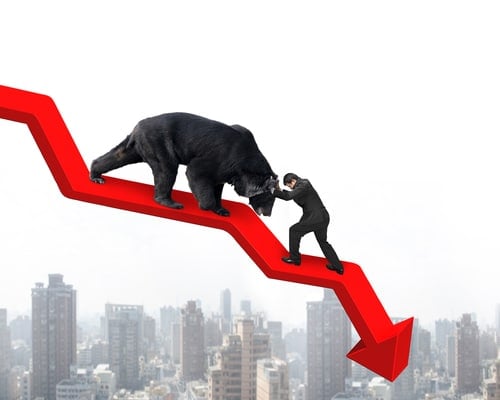
Stock Market Crashes Over 530 Points: June 18, 2021

Stock Market Crashes Over 530 Points: June 18, 2021

Bear Market

The stock market today crashed over 530 points, while markets around the world were plunging as well. According to reports some investors seem spooked that the Federal Reserve may increase interest rates in 2022. Other worries seem to be reports that inflation is taking off, and with Covid 19 cooling down we may see people getting back to work and with the money people have been collecting this may force people to get back to work and continue to spend a lot of the money.

Analysis

** I am not a finacial advisor, please consult with an advisor for proper advice on money.

The drop is interesting, the market overall is dropping these last three weeks and my opinion is that investors may know that high inflation is coming due to the end of the pandemic and the influx of money into the economy by the government as well spells high inflation. I must admit I am not sure why the Federal Reserve wanted to wait until 2022 to increase interest rates though.

I have noticed oddly that the crypto markets are also down. I say this is odd because they somewhat have been a hedge against what happens in the stock market.

  • « Go to Previous Page
  • Page 1
  • Interim pages omitted …
  • Page 15
  • Page 16
  • Page 17

Primary Sidebar

Preferred source

Add Journal of Occurrences as a preferred source on Google

  • Facebook
  • Instagram
  • Twitter
  • YouTube

Latest Brief

Recent Posts

  • World Brief: November 27, 2026
  • Australia Names and Sanctions Two Men Accused of Orchestrating Iran-Backed Antisemitic Arson Attacks: November 27, 2026
  • China Sends 30 Warplanes Around Taiwan on the Eve of Local Elections as Satellite Images Show Landing Drills Across the Strait: November 27, 2026
  • Eisenkot Strikes Coalition Deal With Left-Wing Democrats in Bid to Unseat Netanyahu: November 27, 2026
  • Uganda to Pull Its Troops Out of Lubero in Eastern DR Congo as Diplomatic Row Over Army Chief’s Posts Deepens: November 27, 2026
  • Economic and Financial News
  • Military News
  • Politics
  • Science and Technology
  • Sports
  • Weather
  • Investigations
  • Analysis and Opinion

Footer

About Journal of Occurrences

Journal of Occurrences is a global news site.

  • Facebook
  • Instagram
  • Twitter
  • YouTube
Journal of Occurrences steel seal

Copyright © 2026 · Log in